
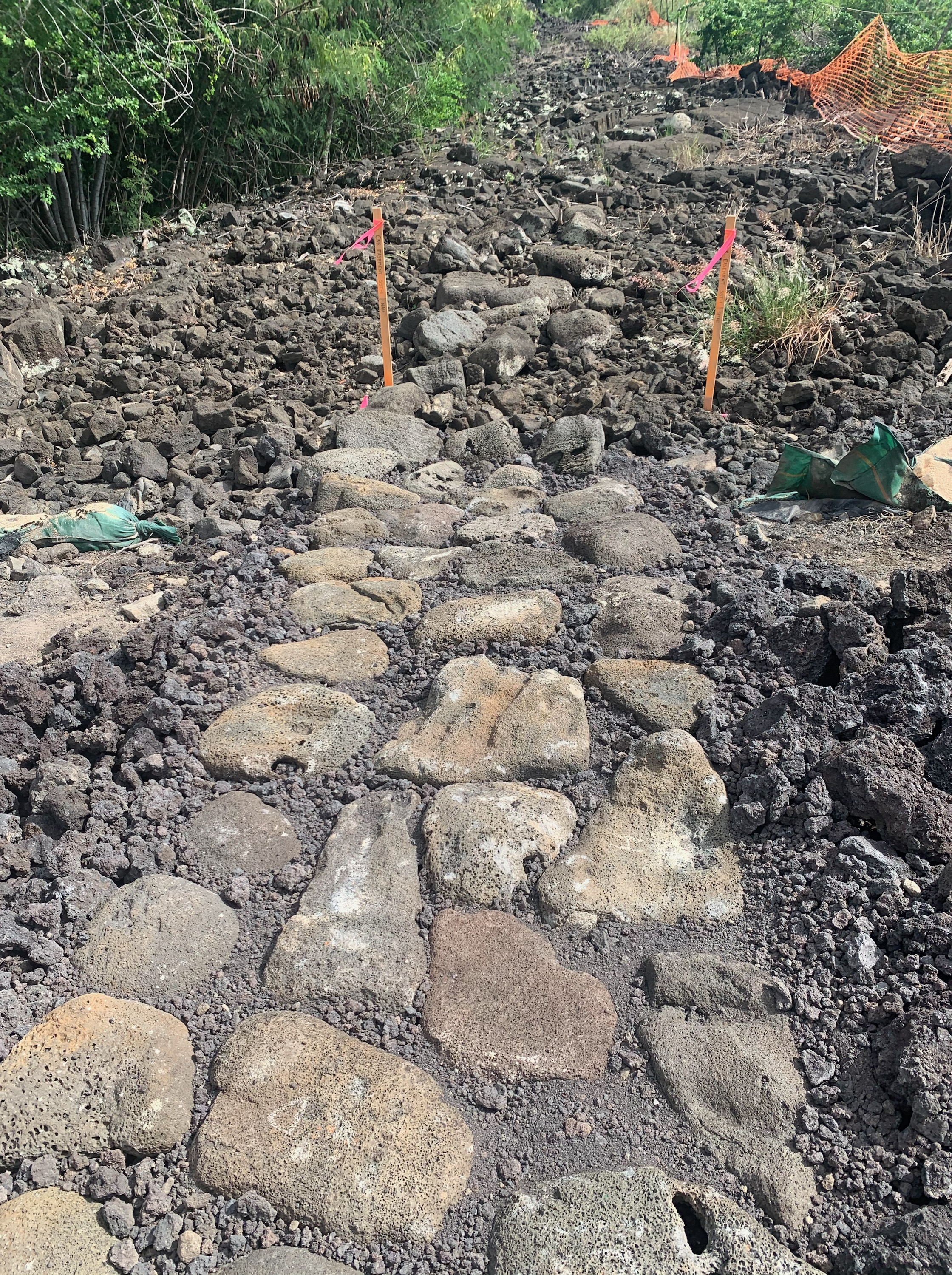

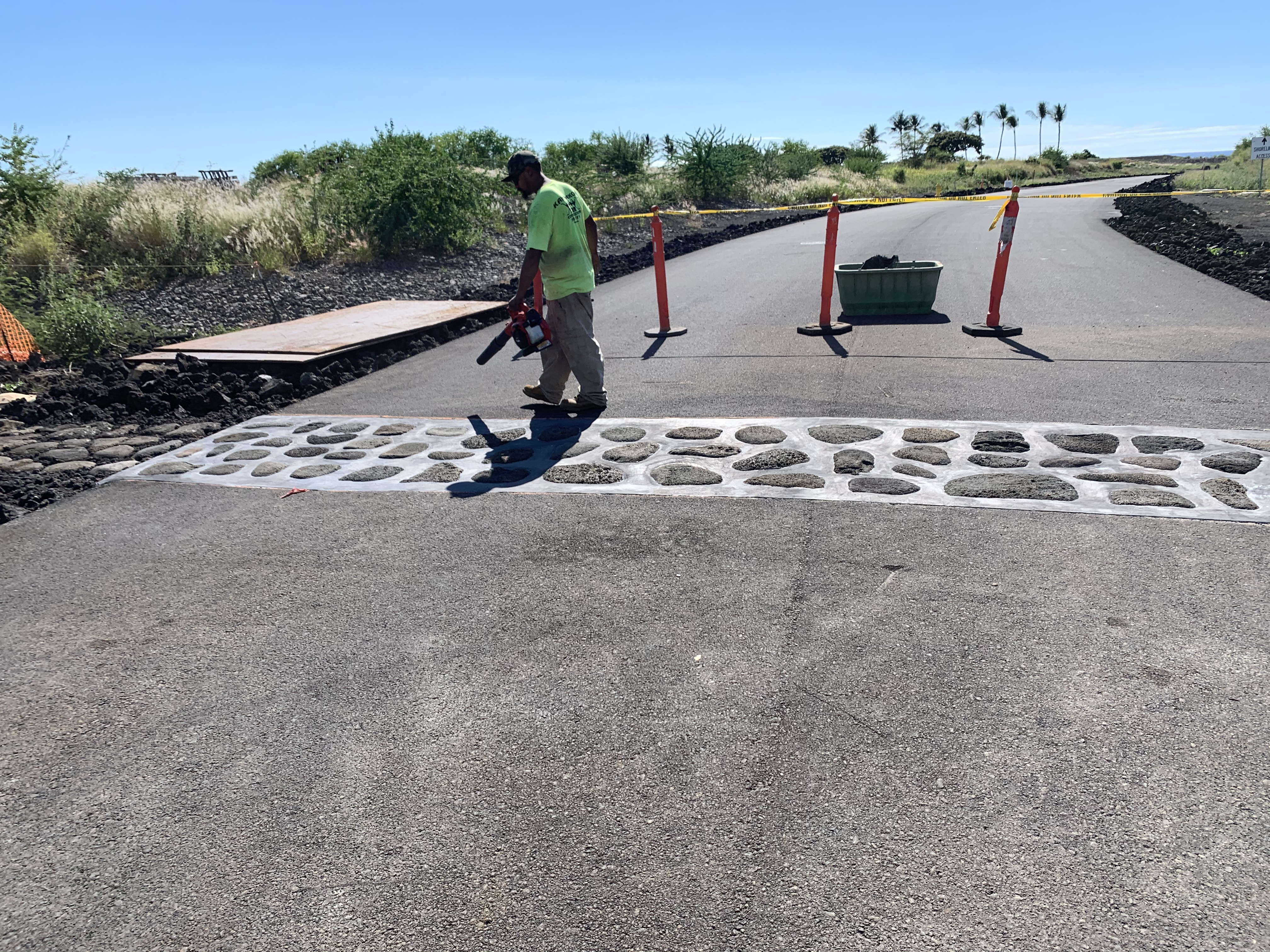
The Ala Loa Stepping Stone Trail once traversed the entire island of Hawaii. Built in the early 1500s, the trail in some areas was made of singular water-worn stones, laid one after another like an old narrow country road. In others, the stones were laid several feet wide to allow passage of carts loaded with goods and human-drawn chariots carrying the Alii from one point to another. Once a year, the King’s men would travel the route collecting taxes from the working-class families that inhabited the many distinct ahupua’a along the way. In this area of the Kona Coast, where Pu’u Ohau defines the boundary between North and South Kona, the trail connected the heavily populated royal enclaves of Kailua-Kona and Kealakekua Bay. Along this stretch, it looked more like a superhighway, several stones wide. The modern world began to encroach on the Ala Loa in the 1800s, and by the year 2000 many areas of the trail had been destroyed and possibly lost forever. But thanks to many concerned individuals and groups, as well as the state and federal government, many segments of the trail have been found and restored. Efforts are being made to educate the public and developers about the extreme importance of protecting the trail from further damage. A broader attempt to restore access to the trail across sensitive areas so that it might serve as a contiguous route around the island, as it did in times past, has been ongoing for 40 years or more.
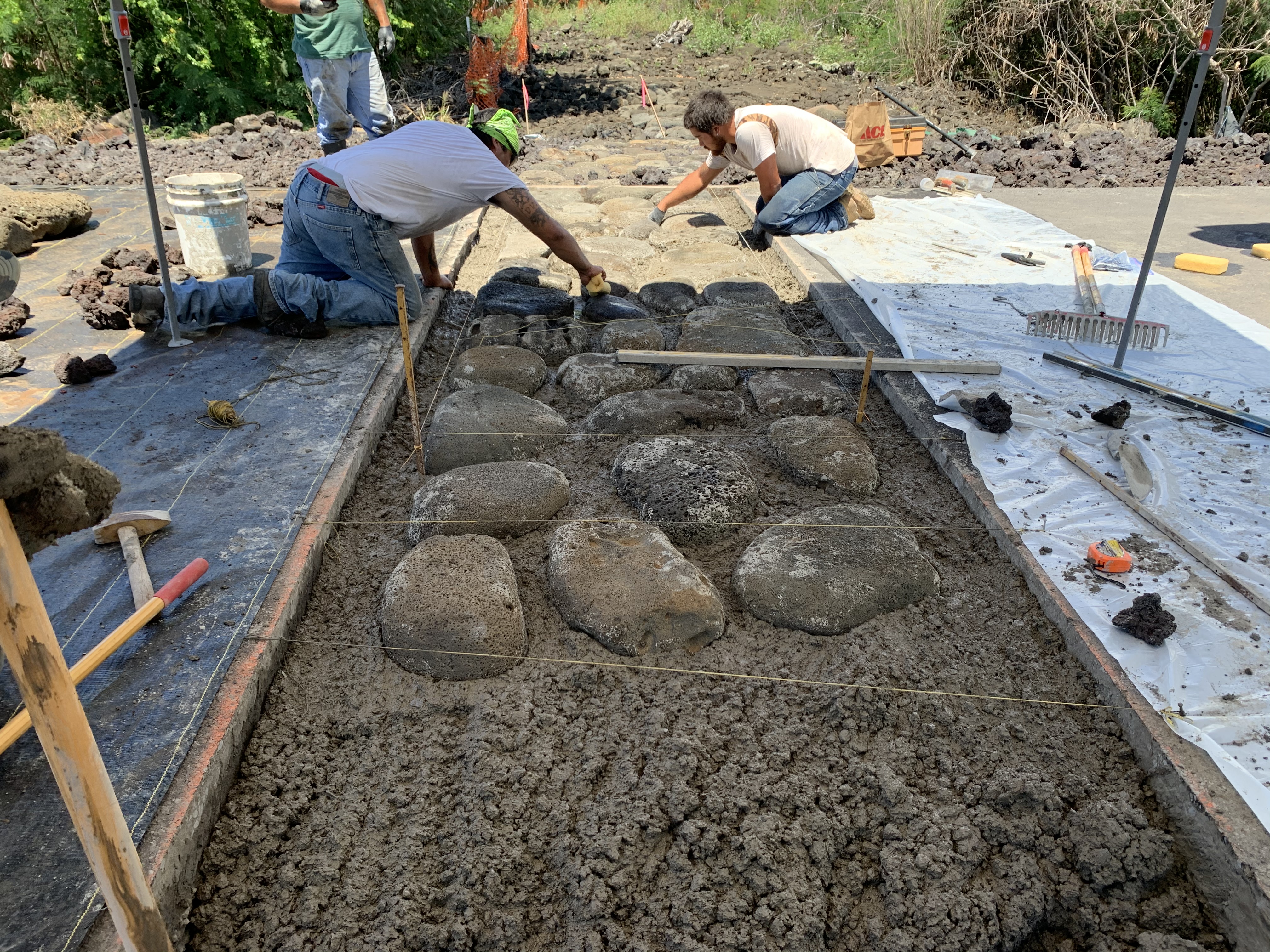
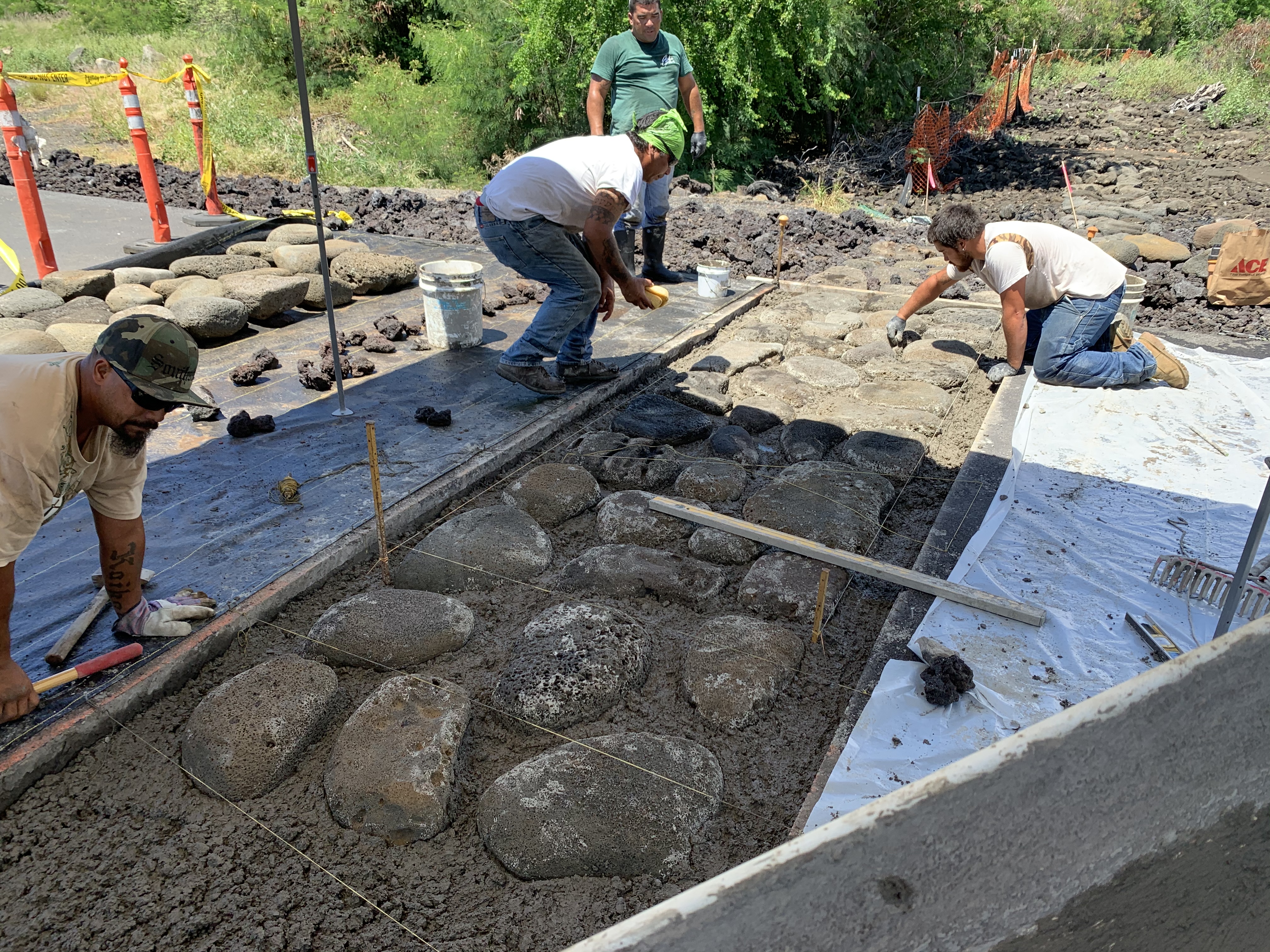
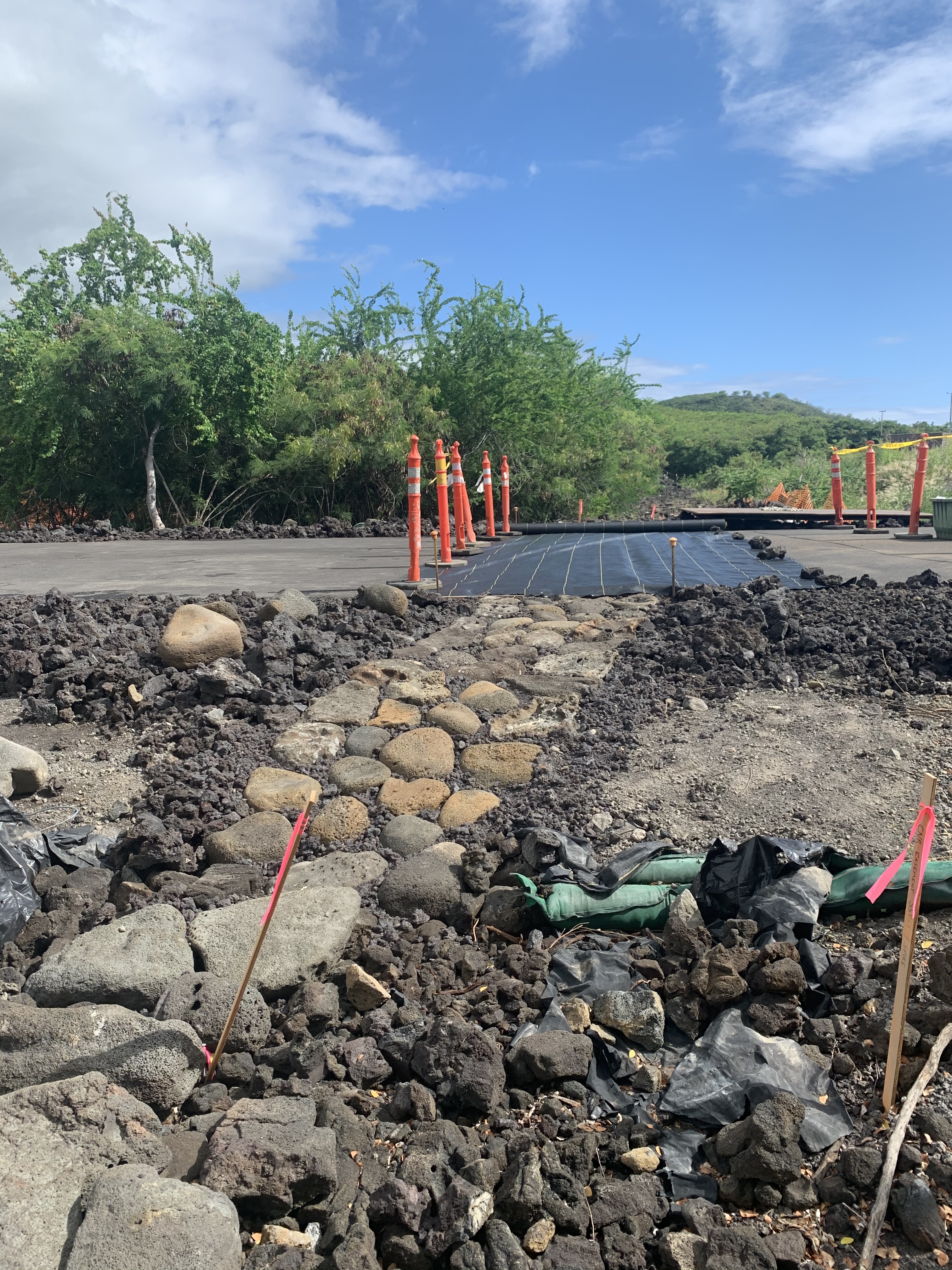
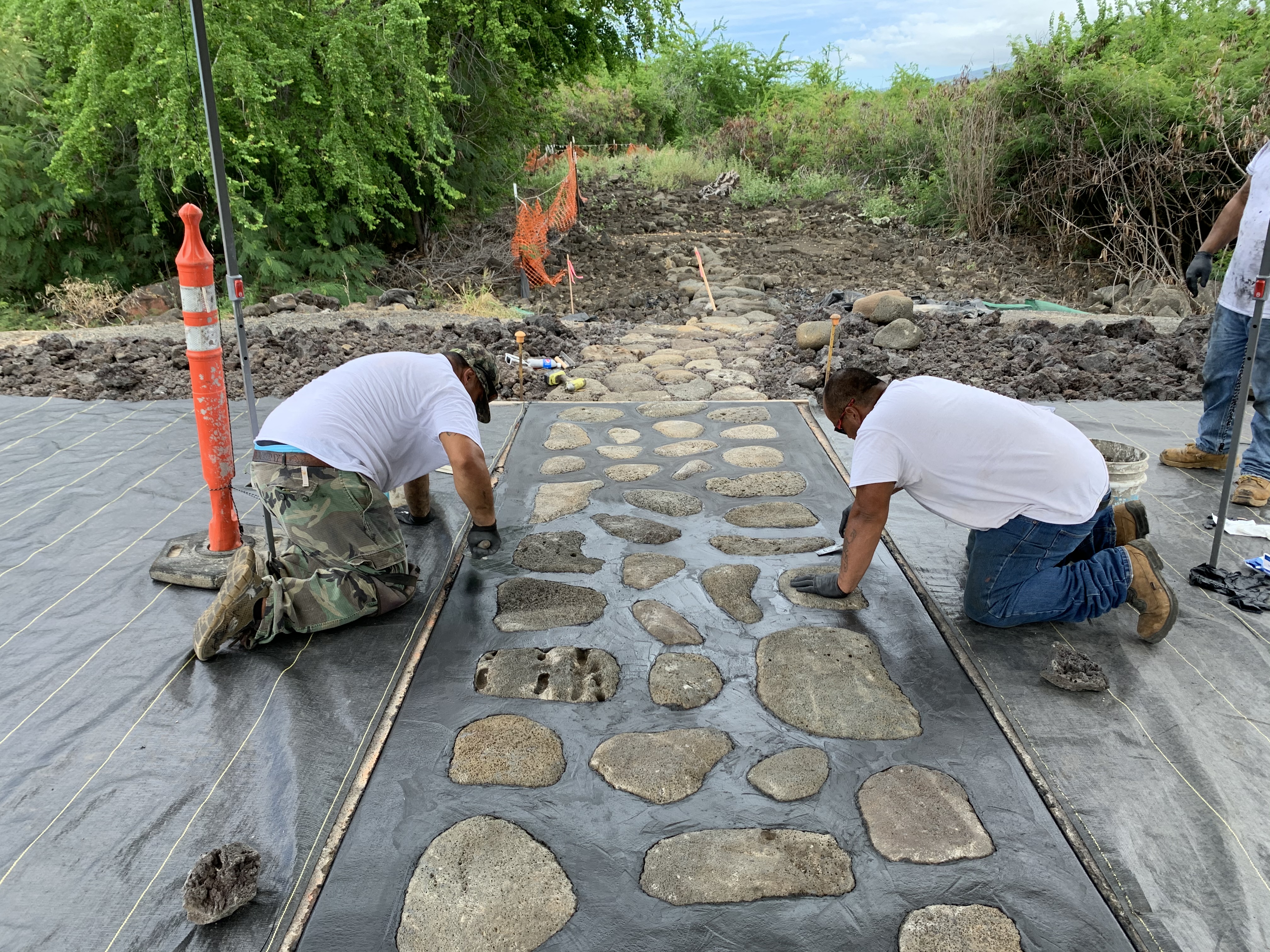
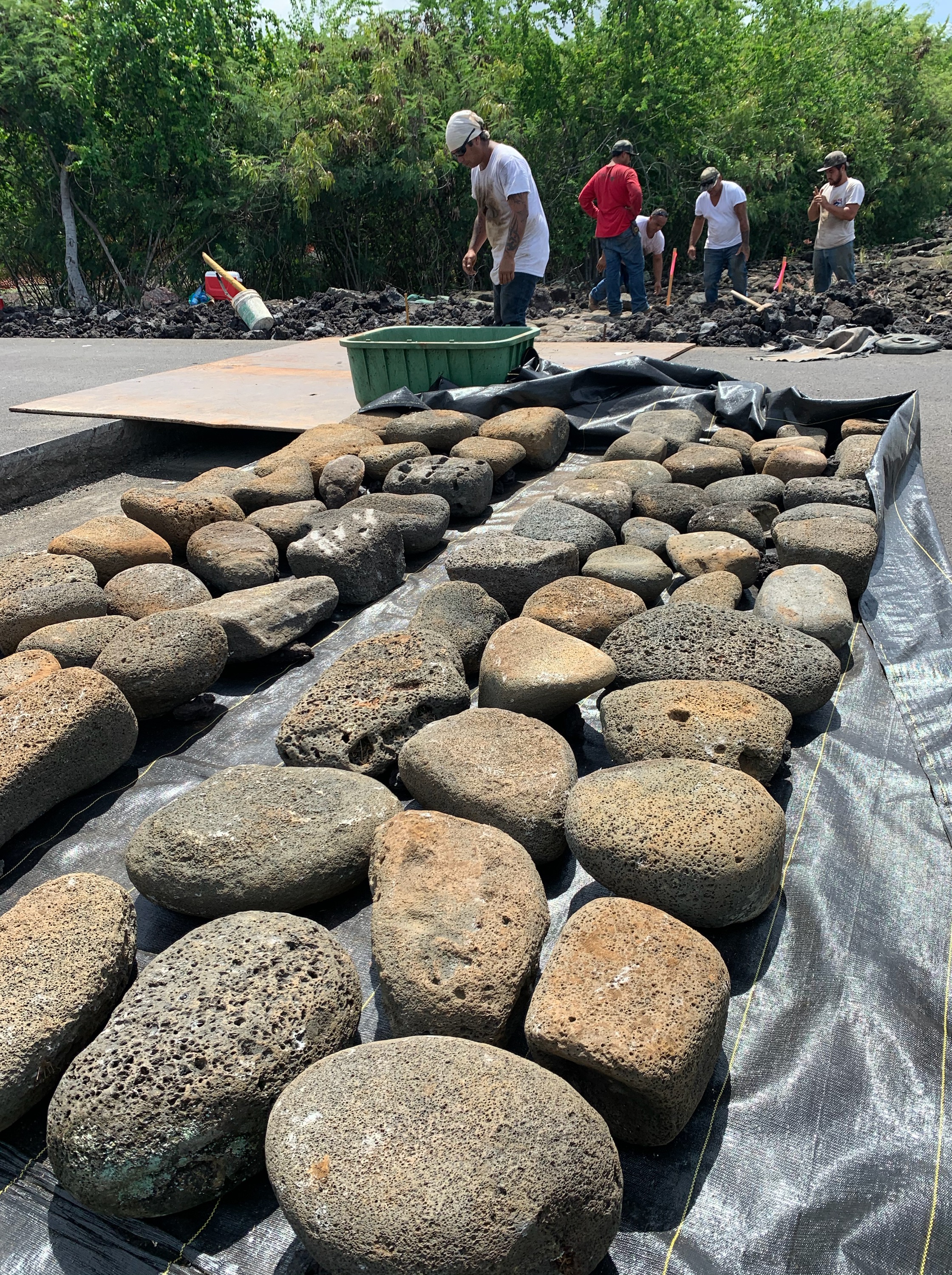
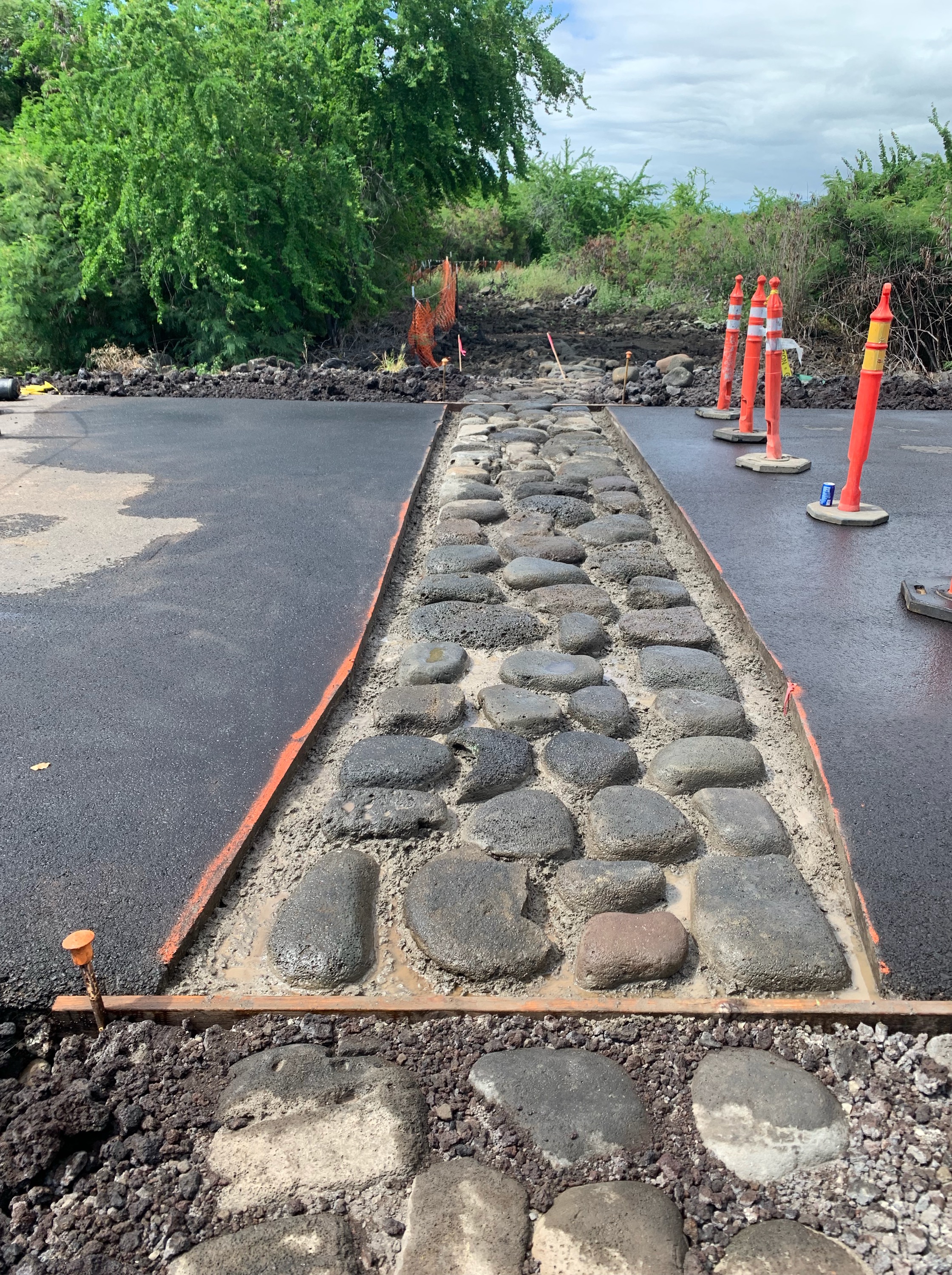
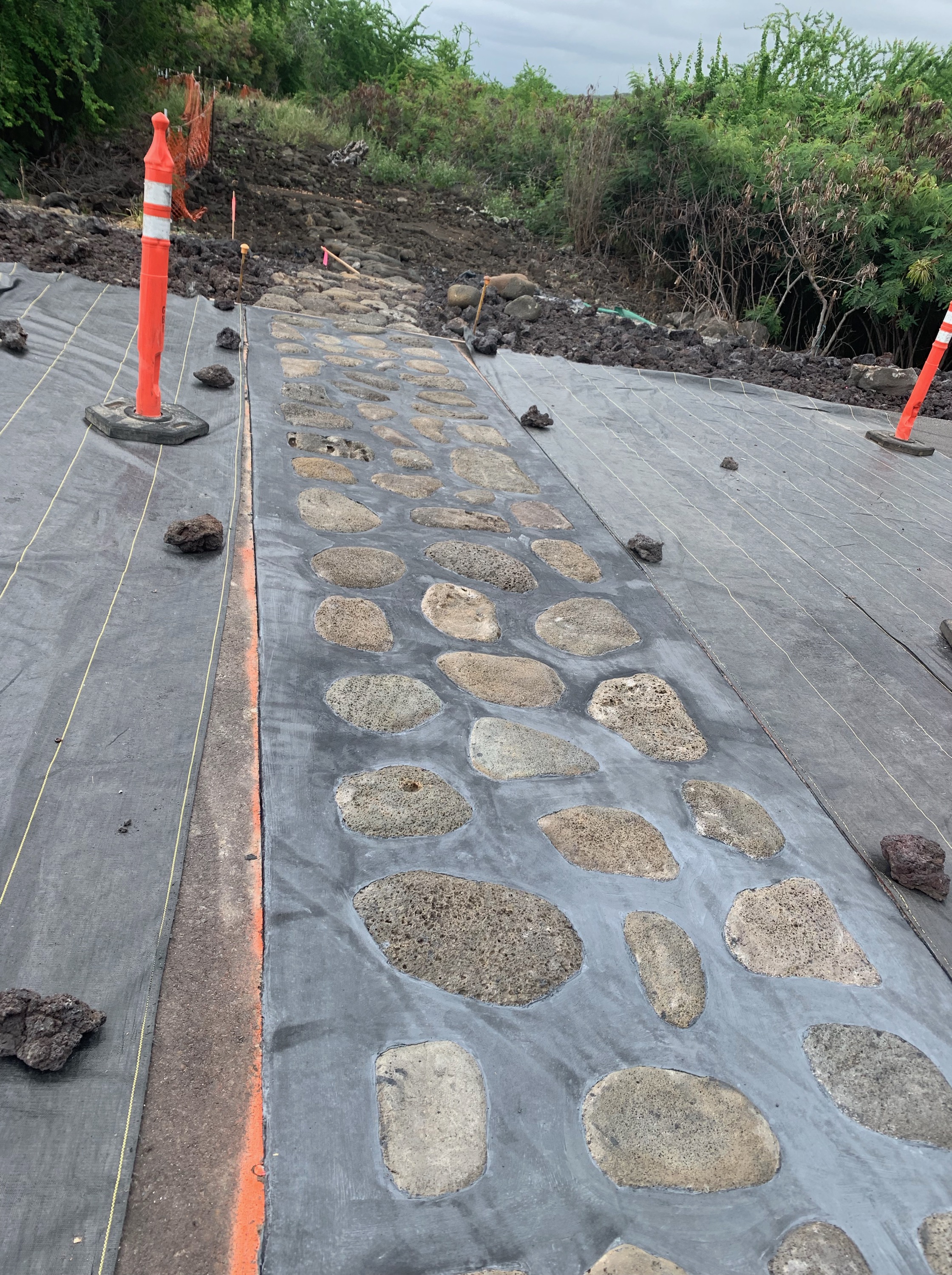
Pictured above was a conundrum we faced as we worked to preserve segments of the trail within the Hokulia project. The old trail alignment and a new road leading to the Shoreline Park at the project were in juxtaposition — trapping the project, you might say, between a rock and a hard place. The contractor and the archeologists at work on the road were unsure how to satisfy the needs of both the past and the present. They called on Kuleana Consulting’s head honcho, Jim Medeiros Sr., a lineal descendant of these same lands, for consultation. This result is this beautiful crossing, which was created by our team of native Hawaiian workers under the direction of project staff archeologists. The men were so proud and ecstatic to do this work, to restore a piece of their forefathers’ culture in this way. “I’ve never seen a work crew more happy,” Jim Medeiros said afterward.
 Kealohapauole, A Love That Never Ends
Leave a comment