The Ala Loa Stepping Stone Trail once traversed the entire island of Hawaii. Built in the early 1500s, the trail in some areas was made of singular water-worn stones, laid one after another like an old narrow country road. In others, the stones were laid several feet wide to allow passage of carts loaded with goods and human-drawn chariots carrying the Alii from one point to another. Once a year, the King’s men would travel the route collecting taxes from the working-class families that inhabited the many distinct ahupua’a along the way. In this area of the Kona Coast, where Pu’u Ohau defines the boundary between North and South Kona, the trail connected the heavily populated royal enclaves of Kailua-Kona and Kealakekua Bay. Along this stretch, it looked more like a superhighway, several stones wide. The modern world began to encroach on the Ala Loa in the 1800s, and by the year 2000 many areas of the trail had been destroyed and possibly lost forever. But thanks to many concerned individuals and groups, as well as the state and federal government, many segments of the trail have been found and restored. Efforts are being made to educate the public and developers about the extreme importance of protecting the trail from further damage. A broader attempt to restore access to the trail across sensitive areas so that it might serve as a contiguous route around the island, as it did in times past, has been ongoing for 40 years or more.
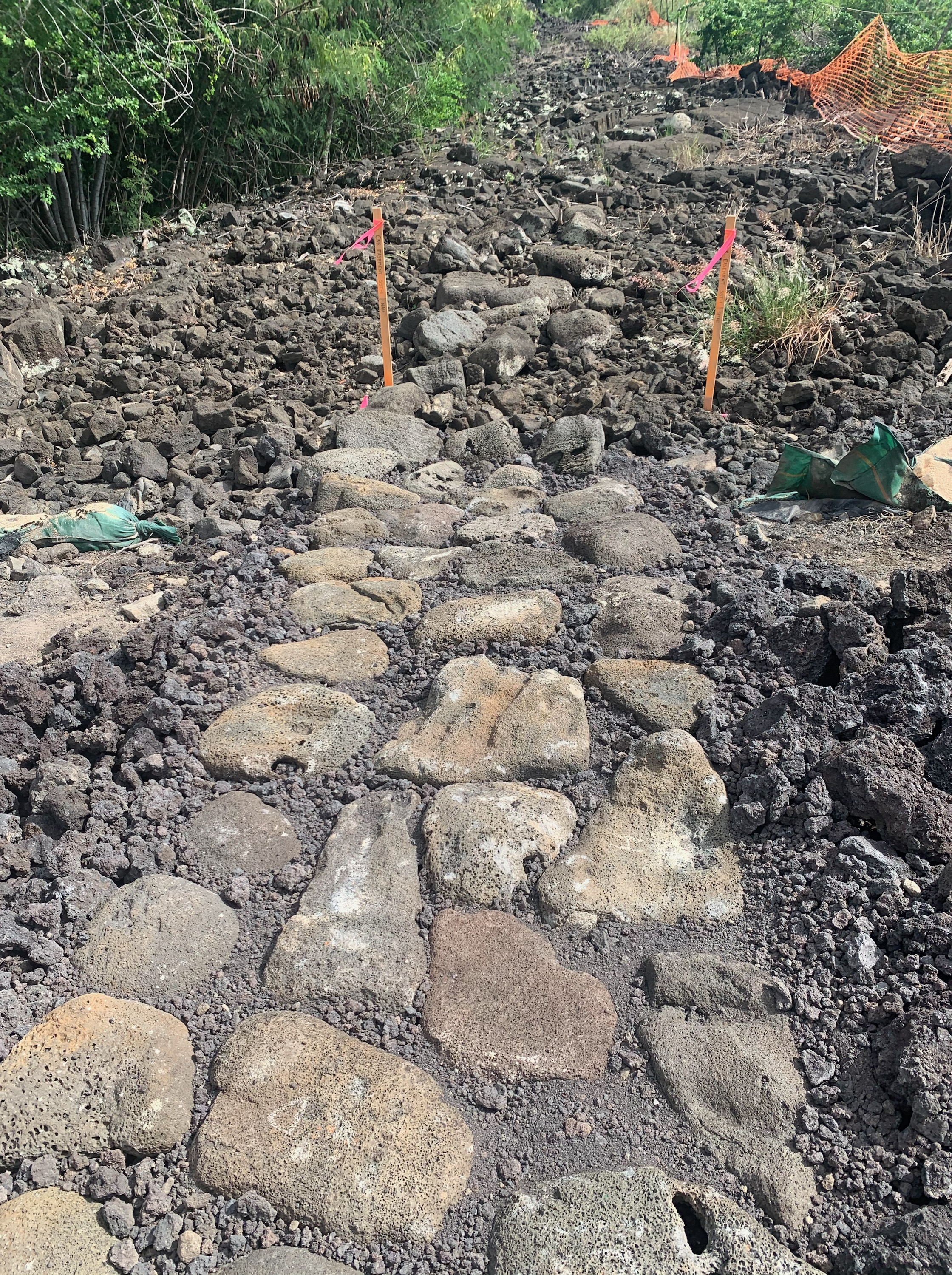
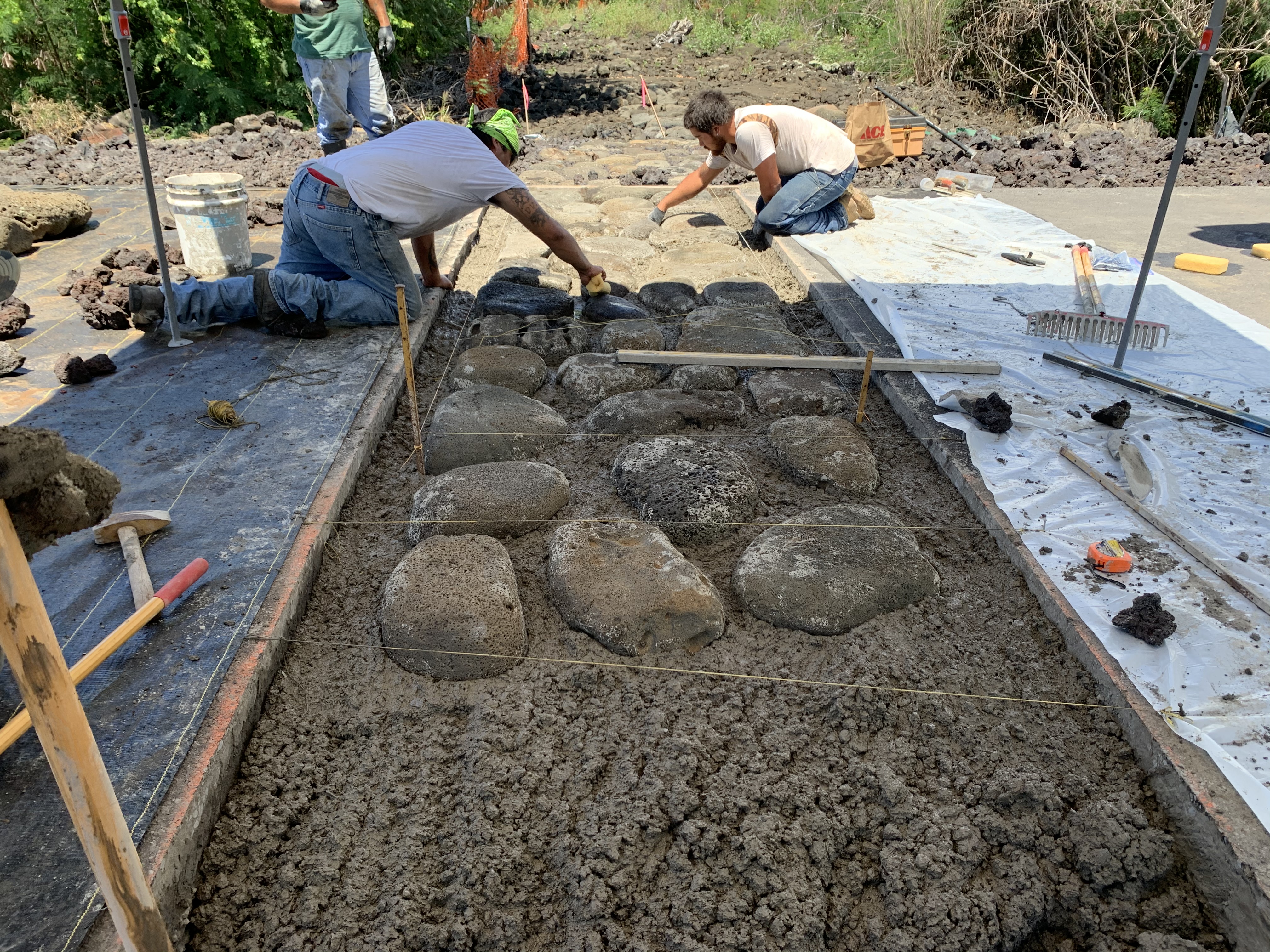
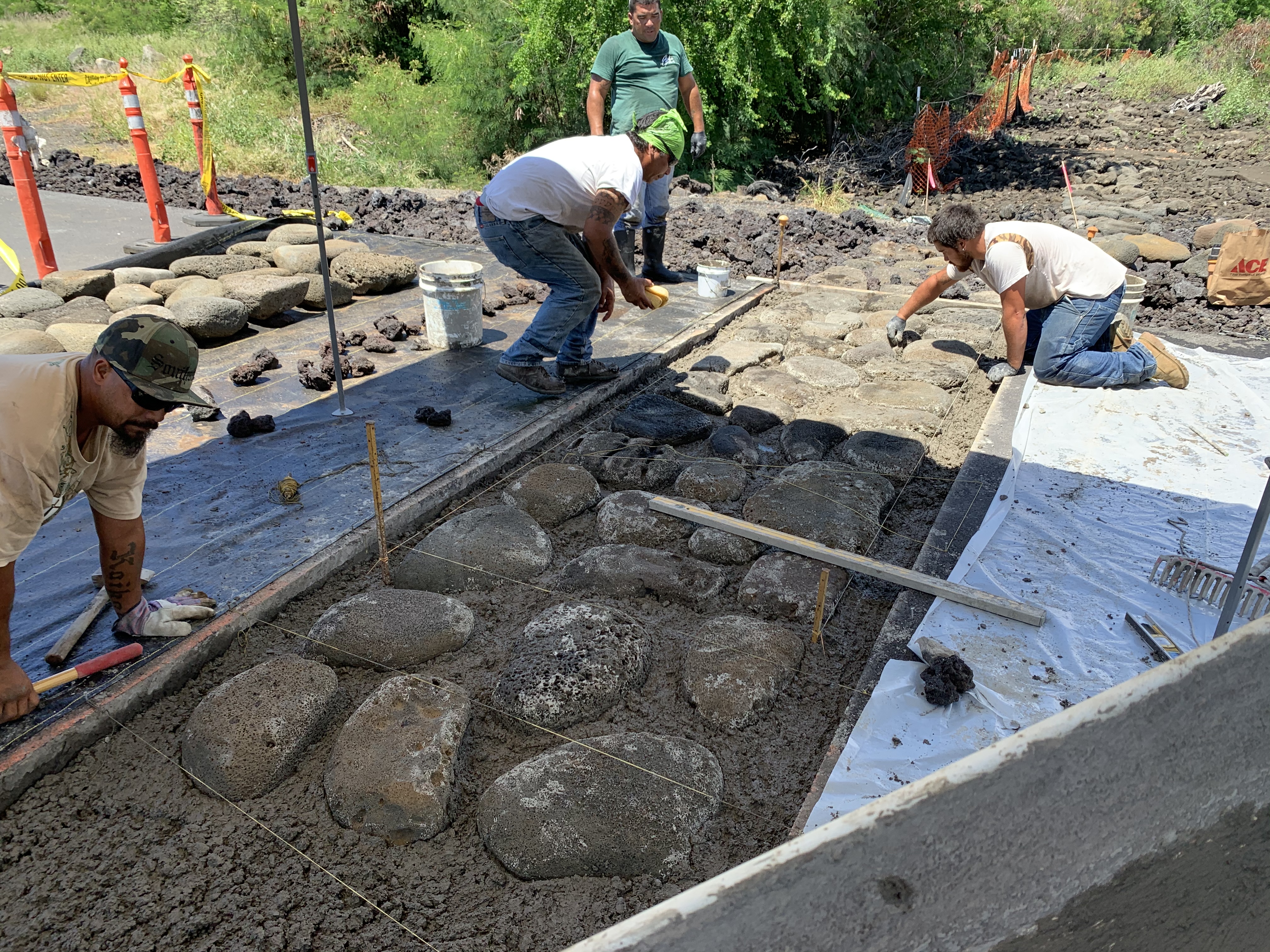
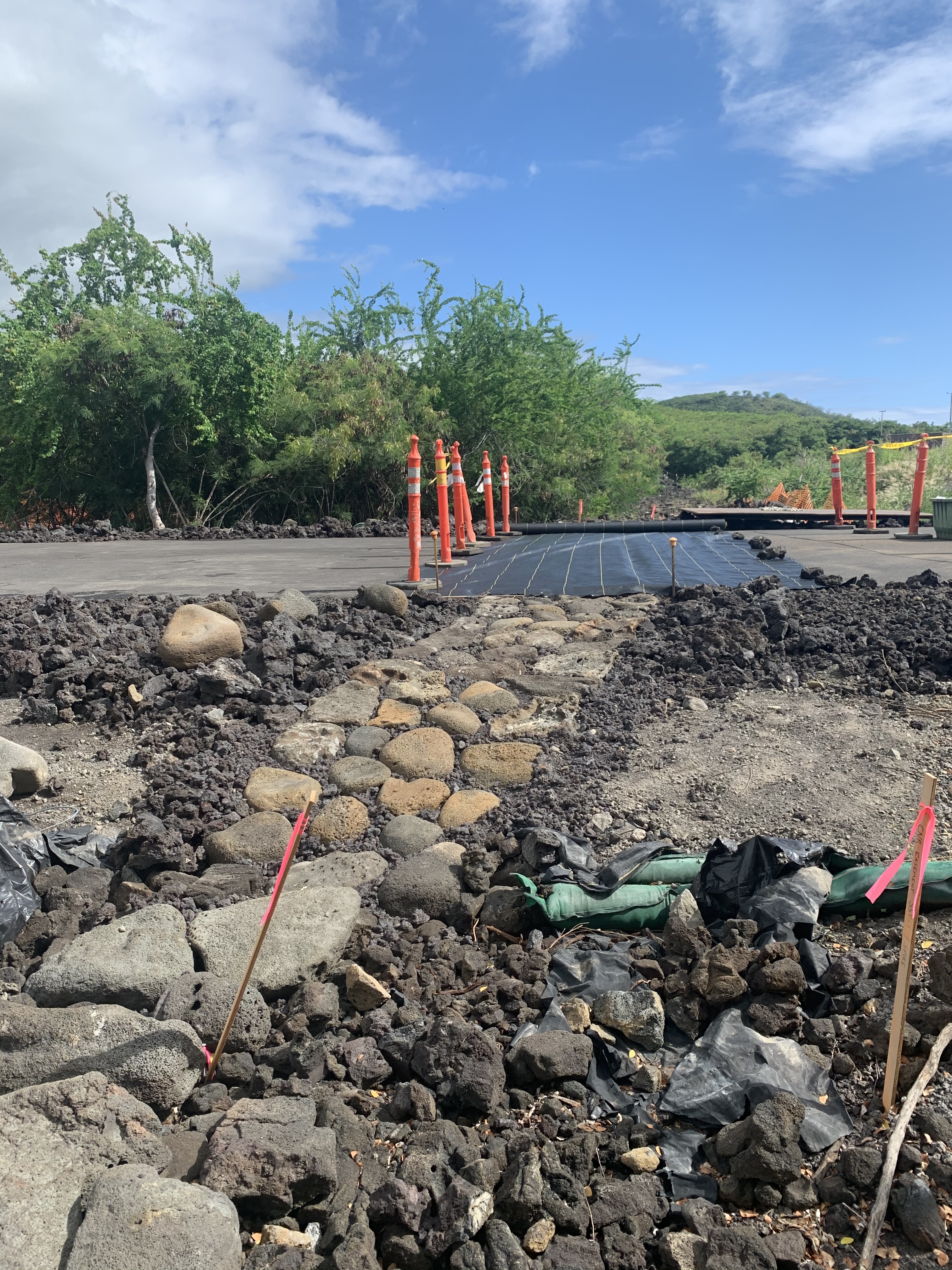
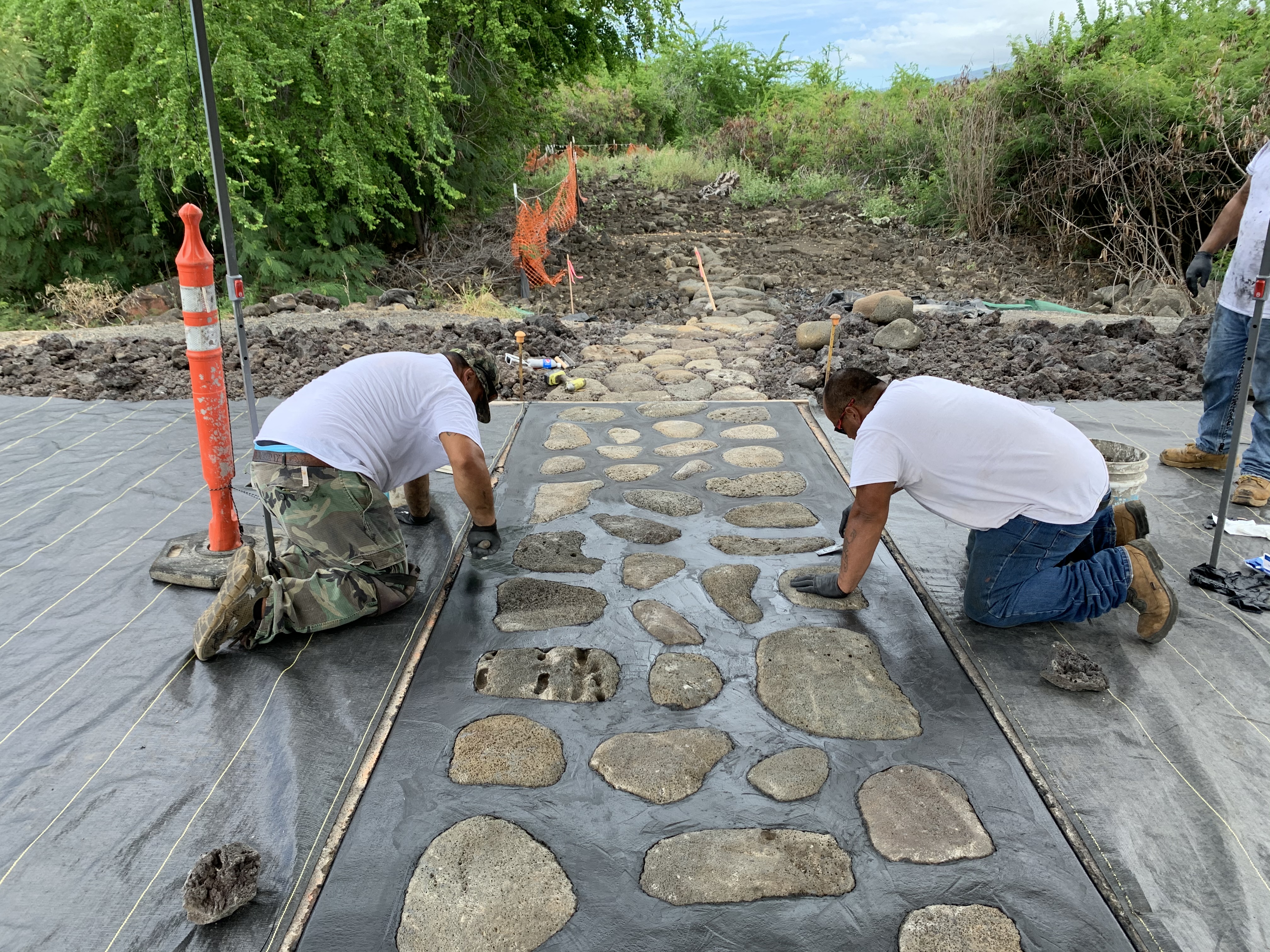
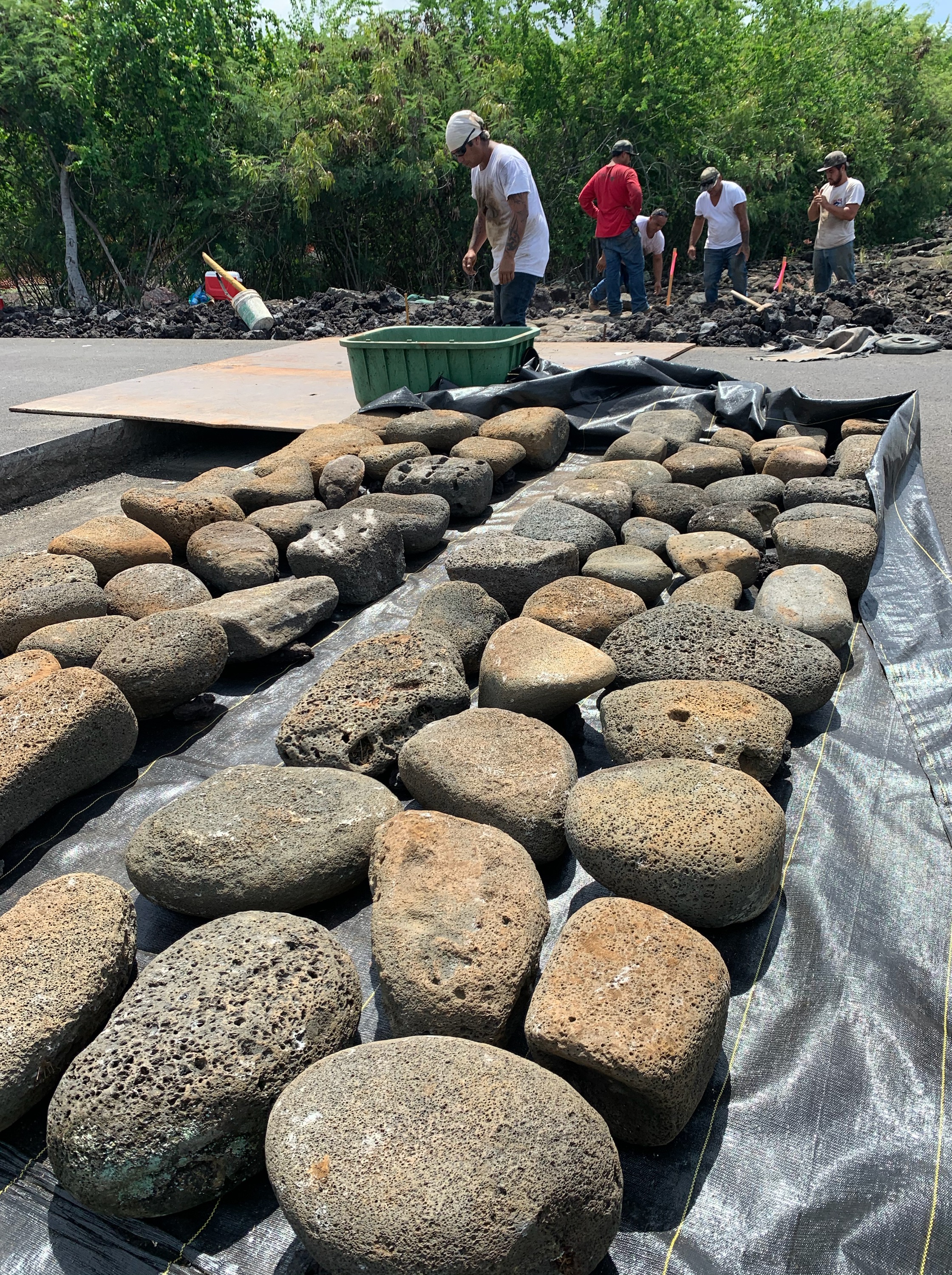
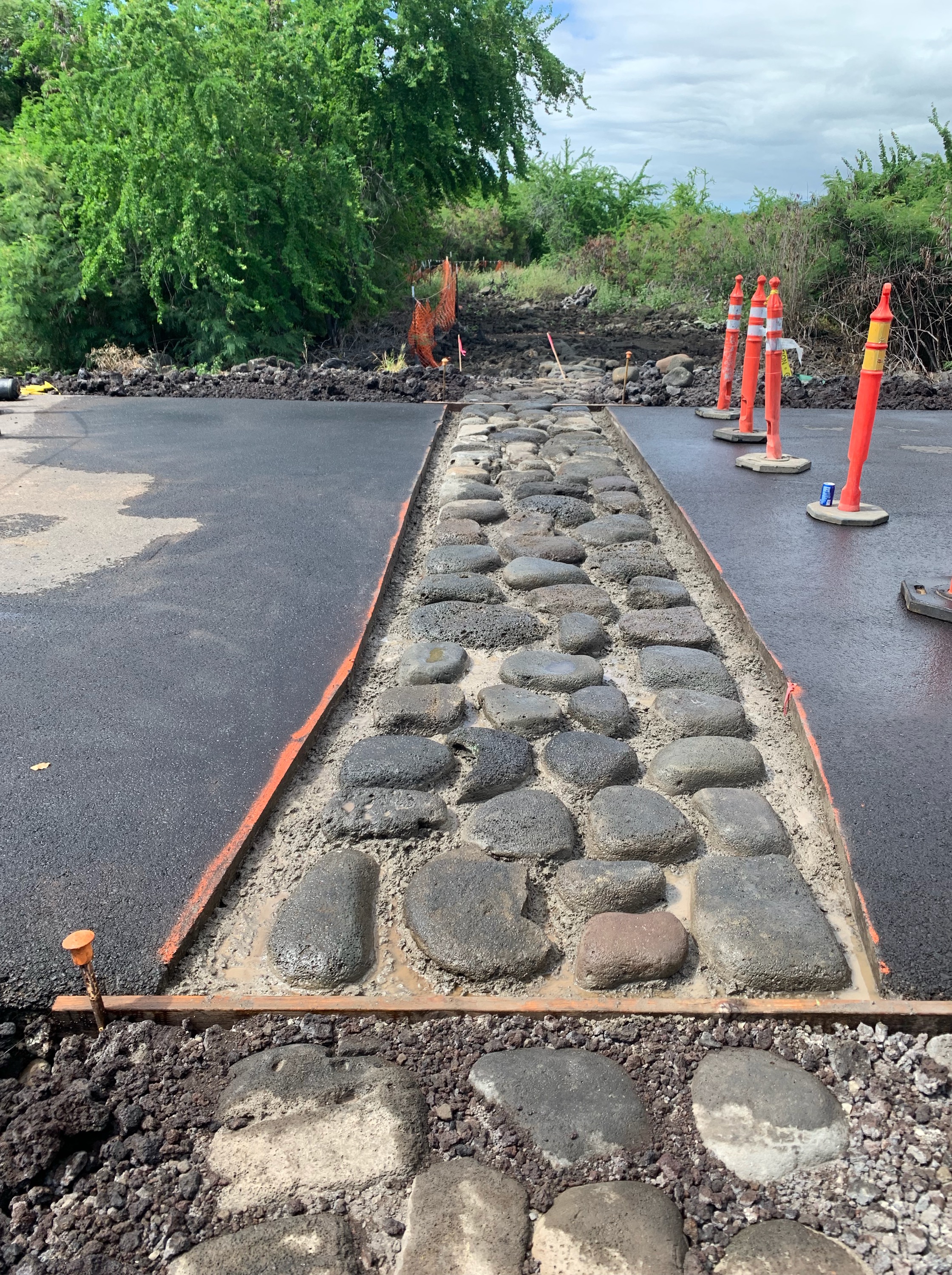
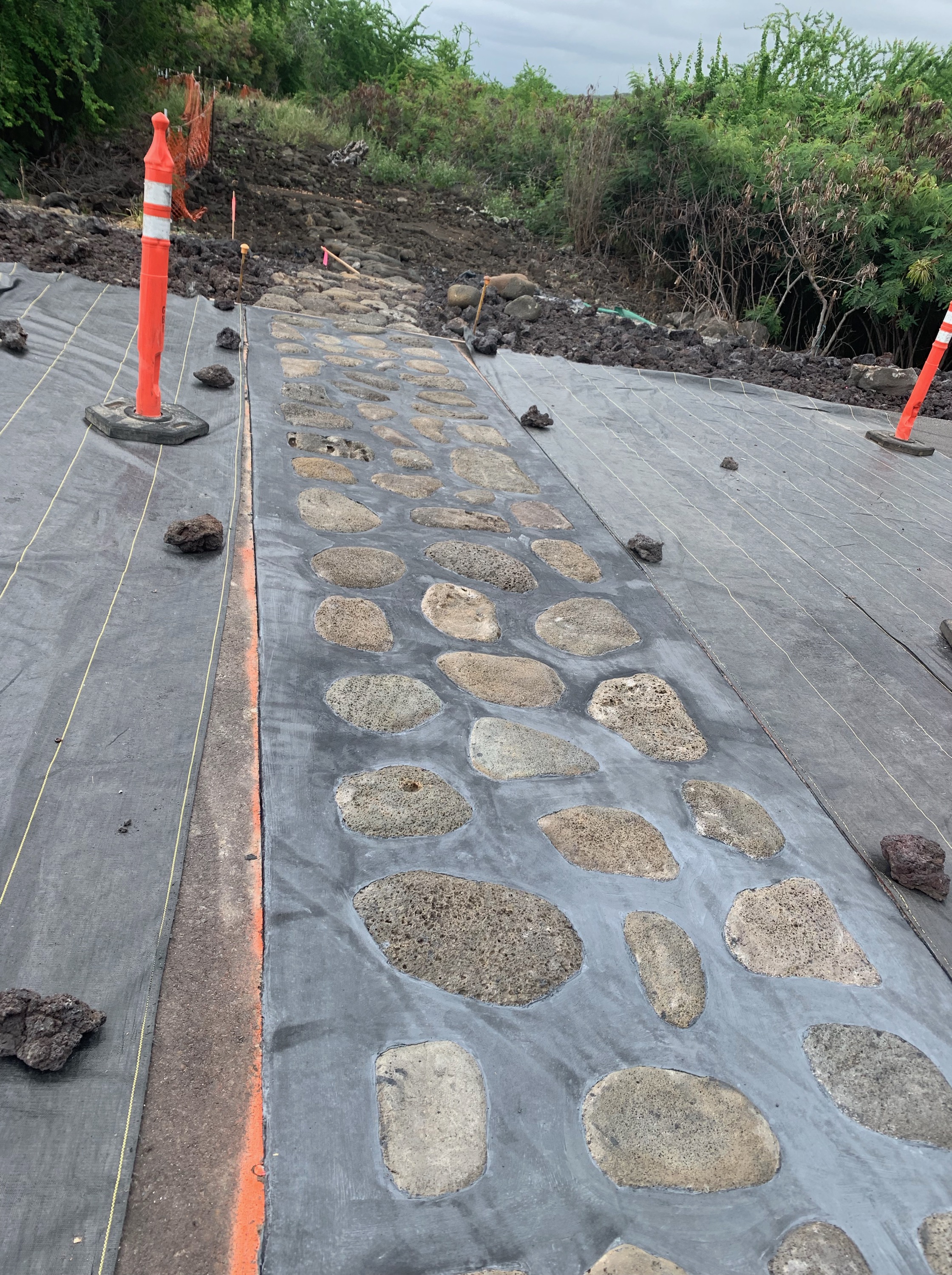
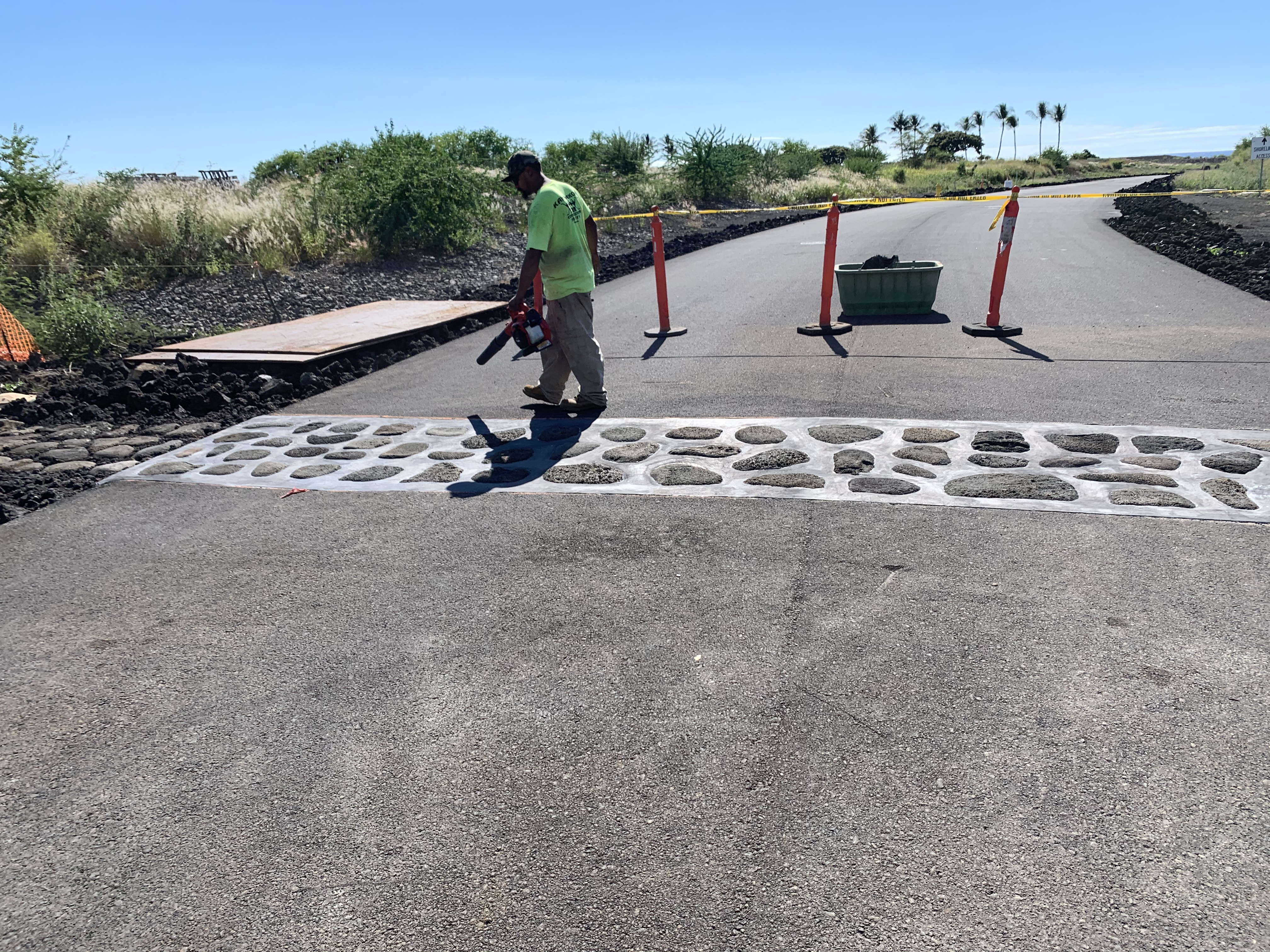
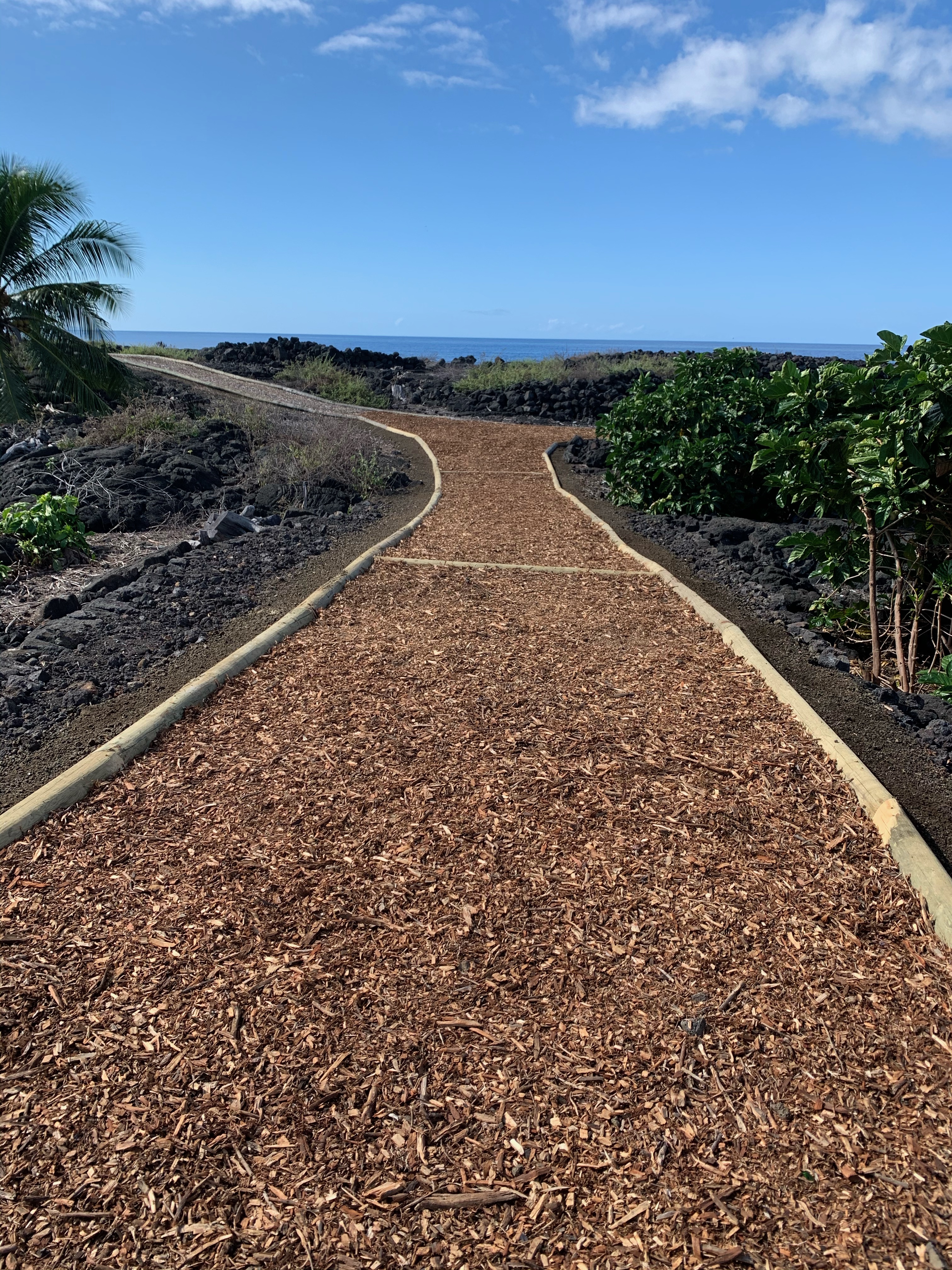
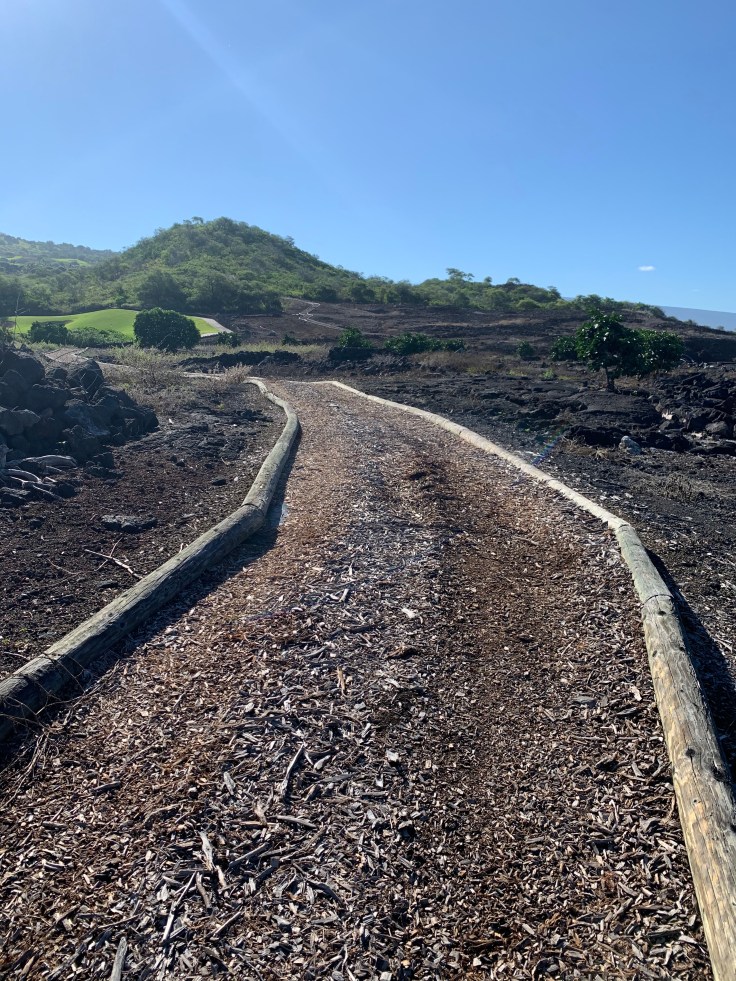
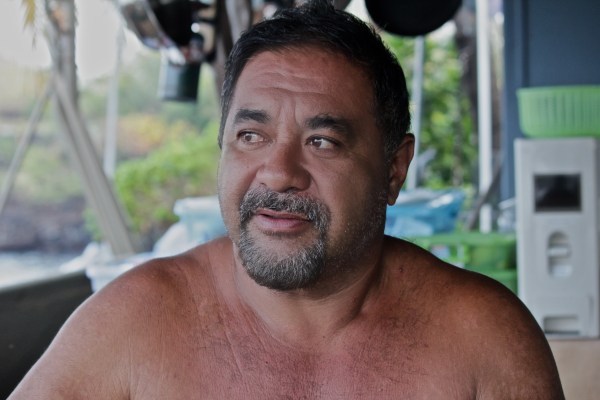
Pictured above was a conundrum we faced as we worked to preserve segments of the trail within the Hokulia project. The old trail alignment and a new road leading to the Shoreline Park at the project were in juxtaposition — trapping the project, you might say, between a rock and a hard place. The contractor and the archeologists at work on the road were unsure how to satisfy the needs of both the past and the present. They called on Kuleana Consulting’s head honcho, Jim Medeiros Sr., a lineal descendant of these same lands, for consultation. This result is this beautiful crossing, which was created by our team of native Hawaiian workers under the direction of project staff archeologists. The men were so proud and ecstatic to do this work, to restore a piece of their forefathers’ culture in this way. “I’ve never seen a work crew more happy,” Jim Medeiros said afterward.
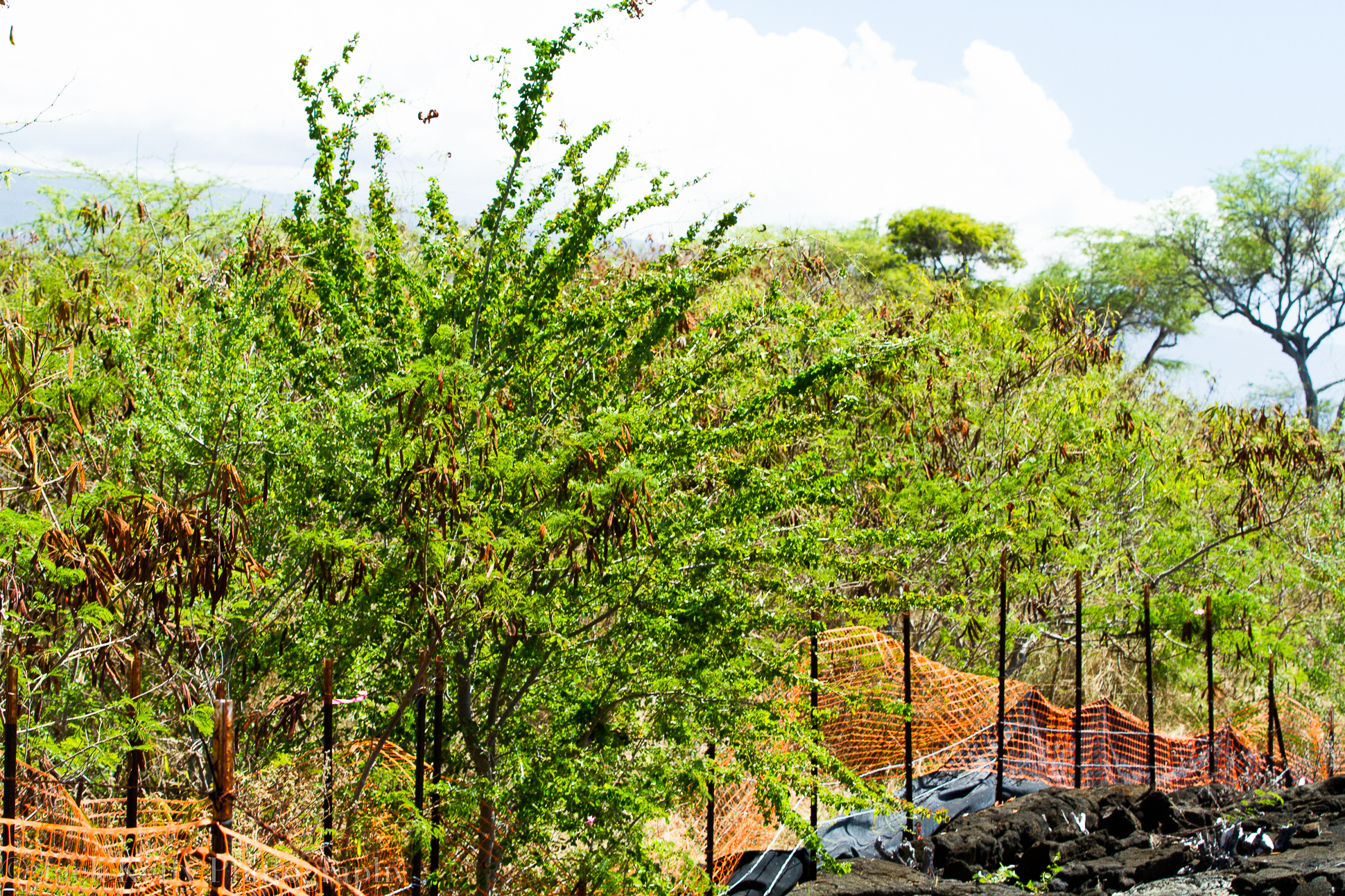
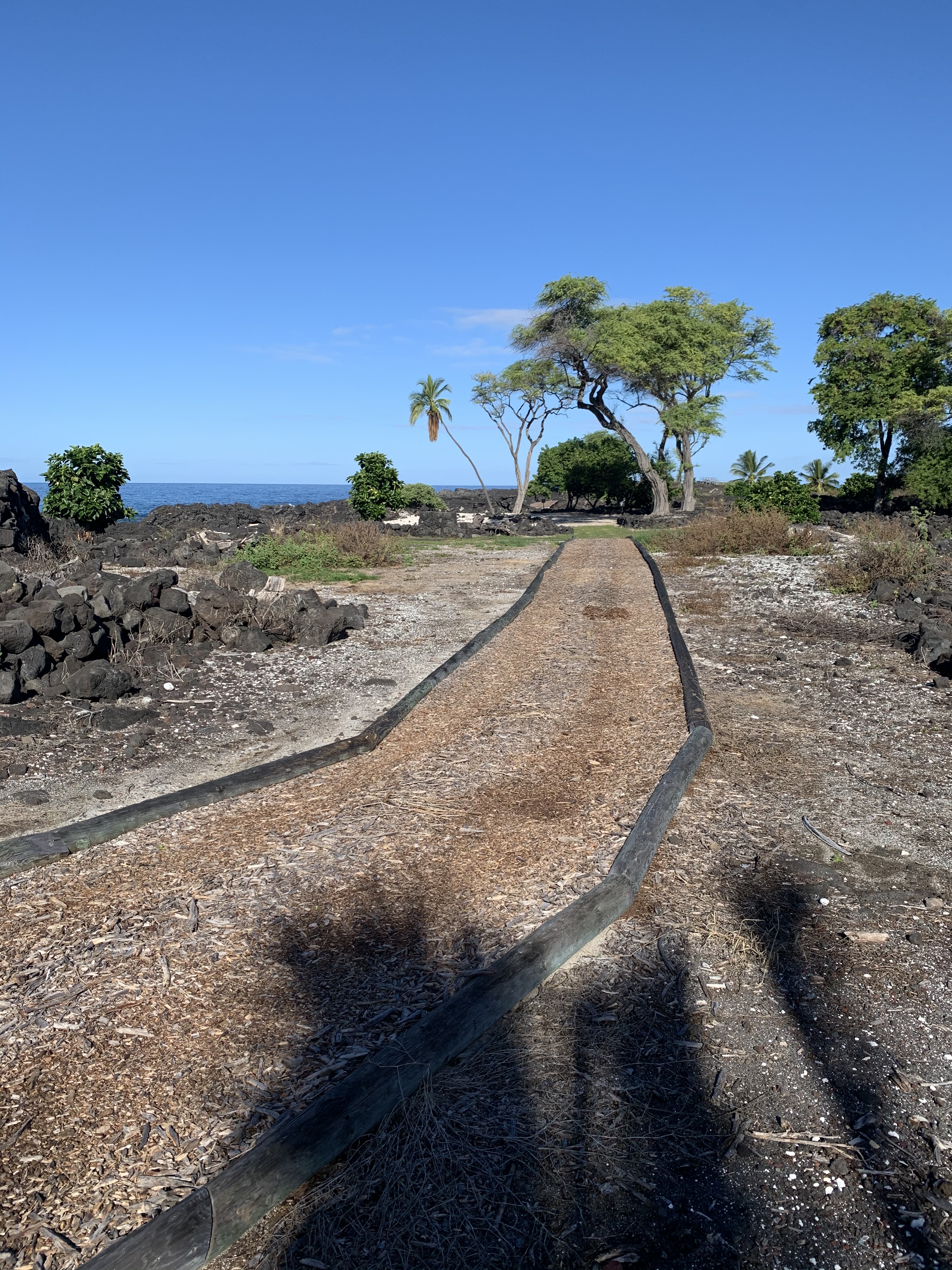
For the past two years, Jim and his son Jim Jr. and their crew have been working to bring to life the Shoreline Park and Public Access Trail along the South Kona Coast adjacent to the Hokulia development. The park and trail will run the full length of the project, meandering through the lava fields along the cliffs. The pathway is endowed with numerous historic and culturally significant sites to view and reflect upon, as well as expansive views of the blue Pacific splashing ceaselessly along the shoreline and the green slopes of the South Kona uplands. Many of these sites have been overgrown and hidden by invasive plant species. Removing the invasives and nurturing the native plants has opened up the sites to the light of day once again. On the southern end, the Public Access Trail will join with the ancient 15th-century Ala Loa trail and continue southward.
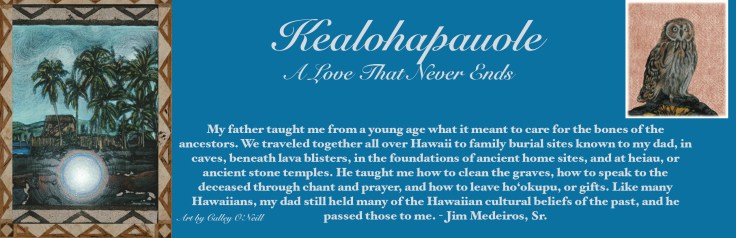
Twenty years ago, Jim stood up and stood his ground to stop the destruction of that same trail in the same place. Read more about Jim’s story in Kealohapauole, A Love That Never Ends.
Twenty years ago, when Jim Medeiros Sr. first stood his ground in defense of his native Hawaiian ancestors, it was all about emotion — especially anger. At that time, anger had its place: There is no fury like a righteous warrior unleashed.
But there comes a time when anger must be transformed into positive action.
Once the warrior reaches the negotiating table and gains the power to take a seat at the table where decisions are made, he must be able to articulate what he wants. Embracing reason, depth and purity of purpose and the energy to turn dreams into solid, three-dimensional results takes much more than anger. It takes love. It takes forgiveness and vision, on all sides. That’s the Hawaiian way — respect for each other’s dreams.
When the result of our actions is more preservation, knowledge and protection for Hawaii of old, along with deeper practice and growth of the culture in the present, all involved experience greater peace and satisfaction.
Read more about Jim’s story in Kealohapauole, A Dream That Never Ends.
The survival of indigenous peoples and the invaluable knowledge base they have nurtured for generations depends on the survival of the cultural landscape that ties the people to the place. The right to an intact cultural landscape that fosters growth, prosperity and human interaction is a civil right, a cultural right, a religious right. These nine southeast Alaskan tribes are petitioning the Department of Agriculture to require identification and protection of particular areas of the forest for cultural use.
Hawaiians gained a similar legal status, including the right to conduct and protect customary practices, even on developed lands, when the PASH ruling was handed down in 1995. That ruling was the basis for the resurgence of Hawaiian rights and the codification of those rights within the Hawaii State Constitution.
We are so happy that these nine Alaskan Tribes are using this legal sword to fight for the Tongass National Forest, including all their native lands, customs and lifeblood. Plese read the article.
The Last-Ditch Attempt To Save America’s Largest National Forest
Alaska’s Tongass National Forest is the world’s largest intact temperate forest. Trump plans to open it up for logging but the tribes living there are taking a stand.
By Cassidy Randall, Huffpost
WOLFGANG KAEHLER VIA GETTY IMAGES
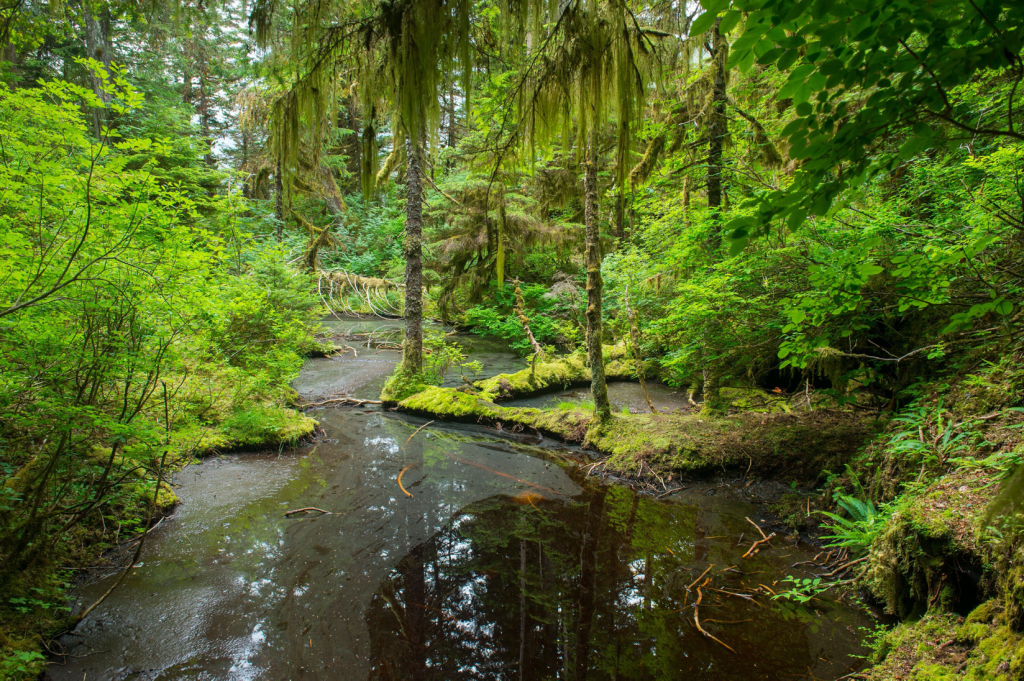
With its verdant stands of old-growth cedar, hemlock and spruce, the Tongass National Forest is the largest intact temperate rainforest in the world. And at 16.7 million acres, covering most of Alaska’s southern panhandle, it’s also the biggest national forest in the United States.
The Tongass’ thick overstory, made up of trees up to 800 years old, shades some of the world’s last healthy salmon streams. It hosts the largest known concentration of bald eagles and serves as a refuge for brown bears, which have declined in other areas of the country. And with these resources as the foundation of their ways of life, the forest has been home to the Tlingit, Haida and Tsimshian people for over 10,000 years.
All this is now under threat from the United States Forest Service under the Trump administration, which plans to remove protections from the forest by the fall to allow new roads to be built in pristine stretches that have never seen industrial development, and begin logging the Tongass’ old growth.
In response, the tribes that live there are making a last-ditch stand to protect their cultural homelands, engineering a new type of plan to recognize the relationship between the forest and the people who’ve lived in it for millennia. If successful, they could help lay the groundwork for other Indigenous efforts to protect functioning cultural landscapes ― all while helping the nation tackle climate change.
With its vast swaths of old growth, the Tongass stores more carbon than any other national forest, on par with the planet’s most dense terrestrial carbon sinks in Chile and Tasmania. It’s the “lungs of the country,” according to Dominick DellaSala, chief scientist of the Geos Institute, a scientific organization working on climate solutions. DellaSala, who wrote a 2019 analysis on the forest, has called the Tongass “Alaska’s best and final shot at preparing for climate change.”
“There’s no way for a country that opens its own old-growth forests to logging to have any kind of moral standing in the world for limiting climate change,” said Niel Lawrence, Alaska director and senior attorney for NRDC’s Land & Wildlife Program. “Lifting the roadless rule will expose some of the most pristine, high-value public lands in the country to the two activities that [the U.S. Forest Service] itself has already determined most damaging to ecosystems: logging and road building.”
National forests, rather than being managed for conservation like a national park, are managed for multiple uses, including resource extractions like logging. But much of the Tongass has been protected from logging since 2001, when President Bill Clinton barred the construction of roads in 58 million acres of the undeveloped forests across the U.S., including more than half of the Tongass. The move came after more than 600 hearings across the country and over 1.6 million public comments, 95% of them in support of roadless protections.
But loggers have long eyed the forest’s old growth ― larger, more commercially valuable trees, which are also important carbon sinks and habitats for wildlife — and now they may be getting the support they want from President Donald Trump. In August, as part of his broad agenda to weaken environmental protections, he instructed his administration to lift all roadless restrictions on the Tongass to begin logging. This is despite the fact that demand for timber has been falling nationally, and a recent report from the Center for Sustainable Economy documented taxpayer losses of nearly $2 billion annually from federal logging programs on public lands.
The tribes who live there have been locked out of the process.
Back in 2018, then-Alaska Gov. Bill Walker initiated the process through the U.S. Forest Service to implement modest rollbacks to the roadless rule specific to the Tongass. Since then, several tribes that live inside the borders of the forest have been participating in USFS talks as sovereign nations. In meetings in Juneau, official memos, calls with Forest Service officials and even hearings in Washington, D.C., the tribes consistently advocated for leaving all protections in place.
But last fall, those tribes watched in frustration as USFS brushed aside a year of tribal input and announced the agency would be following Trump’s order and wiping all roadless protections from the forest. This is despite the Forest Service’s own consultation finding that 96% of the national responses it analyzed were in favor of keeping the roads out of the forest.
“The agency disregarded every single thing we’ve said,” said Joel Jackson, president of the Organized Village of Kake, home to the federally recognized Kake tribe of the Tlingit people. “I felt very disrespected.”
But his tribe and others are not backing down. In July, nine southeast Alaska tribes submitted a petition to the Department of Agriculture, which oversees the Forest Service, to create a first-of-its-kind rule to identify and protect customary cultural use areas of the forest. The aim, they wrote, is “to save their ancestral lands in the Tongass National Forest from destruction at the hands of the agency itself. All other avenues to protect our homelands have been exhausted, to little avail.”
The U.S. currently has no specific mechanism for protecting public lands that are also traditional cultural lands. National monument designations have long been used to protect culturally significant land, but Trump proved that protection tenuous when he took the unprecedented move to roll back Bears Ears and Grand Staircase-Escalante National Monuments in Utah in 2017 to open up oil and gas drilling. And there are few, if any, models where tribes have control over the resources on their cultural homelands ― land the federal government seized and turned into public lands, like the Tongass.
But the proposed new rule ― called the Traditional Homelands Conservation Rule ― is intended as a tool for Native Alaskans to protect their lands in the face of these threats.
If it’s approved, it could potentially usher in a long-overdue addition to the nation’s public lands system. In Alaska, it would give the tribes management or co-management of their ancestral lands within the Tongass National Forest’s borders by establishing consultation parameters with USFS and requirements to include tribal knowledge and input on land and wildlife management. This would include protecting the old growth, which shades the salmon streams that many tribes rely on for subsistence and cultural identity, from logging.
“As a country, we have a long way to go to dig ourselves out of a shameful practice of suppressing and ignoring and stripping Native peoples of their privileged position,” Lawrence said. He believes that if the tribes’ petition is granted, it would be a major step toward giving real weight to “Native people’s stake and management of lands, their special knowledge about what’s good for and sustainable on the land, and their legal status as sovereign bodies entitled to respectful consultation with our federal government.”
Alaska, in particular, has been in the crosshairs over the past four years. As the biggest and least populated state in the U.S. with a massive expanse of undeveloped land teeming with natural resources, Alaska has been a major target of the Trump administration’s attack on public lands.
Under his watch, Trump has ordered protections on the world’s biggest wild salmon run, Bristol Bay in southwest Alaska, to be reversed to allow mining. And roughly 1.6 million acres of the Coastal Plain of the Arctic National Wildlife Refuge ― home to the Porcupine caribou herd that is at the center of the Gwich’in tribe’s cultural identity ― will be open to oil and gas drilling soon.
Should the old growth of the Tongass be opened to logging, Jackson and the rest of the people of Kake can predict the impacts; they’ve seen them. Forty years ago, Kake implemented a community project to log the surrounding area in an effort to bring in jobs and income. Within months after the last tree fell, the water levels in the streams dropped, only to flood uncontrollably in the rains. The number of moose and deer, which had dwindled with logging, “are only just coming back since there’s more cover” from second-growth trees, Jackson said.
The consequences were devastating in this region where being able to subsist off the land helps to offset the cost of living. The town’s population of 1,000 dwindled to its current number of 500 as young families moved away in search of opportunity. Unemployment in the remaining community hovers around 80-85%, according to Jackson.
The tribes’ petition isn’t solely about protecting irreplaceable old growth. It would allow tribes to control resources for traditional cultural practices, like accessing wood for carving canoes and totem poles, and hunting wild game in times of need without petitioning far-flung agencies for permits.
“This is about helping our people with our health and spirituality,” said Marina Anderson, vice president of the Organized Village of Kasaan of the Haida tribe. “People have been disconnected and had access and knowledge taken for so long. … We start to heal when people take pride and understanding of who they are when they partake in our cultural ways, which is really healthy for our people and our traditional economy.”
The final decision on the plan to lift all roadless protections from the Tongass is expected to come down from the Trump administration this fall. Should the Department of Agriculture accept the tribes’ petition, it would pause that plan (and any new road building for resource extraction) while USFS consults with the tribes on identifying and protecting their cultural homelands in the forest. But — and it’s a big but — the Department of Agriculture is not required to accept or even respond to the tribes’ petition.
Some have hope that, even if the agency doesn’t respond to the tribes’ petition, a potential Joe Biden administration in the near future would be friendlier, not just to environmental conservation, but to recognizing and coordinating with sovereign tribes in the management of lands on which their cultural survival depends.
Kealohapauole, A Love That Never Ends is the story of Jim Medeiros Sr., descended from kings, raised on the farmlands of South Kona, trained in the ancient arts, and bold enough to stand up for his rights as a Hawaiian. It is also the story of Protect Keopuka Ohana, the nonprofit organization created to promote and defend the Hawaiian perspective. Throughout the events described in this book, we believe we drew strength from the spirits of the native Hawaiians ancestors, and from principles inherent in the Hawaiian Way.
This book itself is an act of preservation. It is entirely nonfiction — not “based on a true story,” but a true story, told from Jim’s and my unique perspective. It is a story many people thought they knew but will find, upon reading it, that they didn’t. The reams of press coverage about the historic Hokulia court battle shed little light on the actual intricacies of the struggle.
It’s a story that needs to be told — a modern-day history of a place and a people struggling to maintain their identity in the face of rampant development and the incursion of people and cultures from around the world. You don’t have to be Hawaiian to care about these issues. When rich indigenous cultures like that of the Hawaiians are lost, we all lose knowledge critical to our future on Earth. As each generation passes and is assimilated, the light of Aloha grows dimmer.
In the hills and on the farms and ranches of rural Hawaii, this cultural knowledge is maintained and nurtured by the old ones. As their children become educated in Westernized schools and move on to college and urban areas in Hawaii or on the mainland United States, preserving the past becomes more difficult.
Too much is being left out of today’s history in Hawaii, as scholars focus on the past. We — Jimmy Medeiros and I – hope this volume will serve as a slice of recent history, an homage to the past, and a basis for hope that citizen action can still make a difference.
Aloha! I am launching a web site for my recently published book, Kealohapauole , A Love That Never Ends! The name refers to Hawaiians’ deep love for the living spirit of their ancestors, as well as for the cultural landscape beneath which they lie. The burial practices of the Hawaiian culture of old left a landscape of burial sites where the deceased were laid to rest, often with objects that were important to them. Their prepared bones were wrapped in home produced kapa cloth and placed in a lava tube here or there, or in a cave, even beneath the sand on the shore. When the remains were laid to rest, it was expectation of the descendants that they would lie safely forever.
Sadly, many in the modern world believe that their plans for that same landscape should take priority. History and culture be damned! Many of them wrongly believe it would be impossible to develop in Hawaii without destroying what has been left behind.
That’s what this book is about. The age old gulf between two schools of thought, one Western, one Hawaiian. It’s the story of the Kona, Hawaii community’s ongoing twenty year effort to effect change – to change peoples minds. The battle has been fought on the streets, in the courts, at countless public meetings, at hours and hours of Burial Council proceedings, in the halls of Congress…but most importantly, on the ground and with the guidance of the ancestors.










 Kealohapauole, A Love That Never Ends